Destination guide
About Mount Kenya National Park
Mount Kenya National Park: Complete Guide to Wildlife, Hiking, Fees and Accommodation
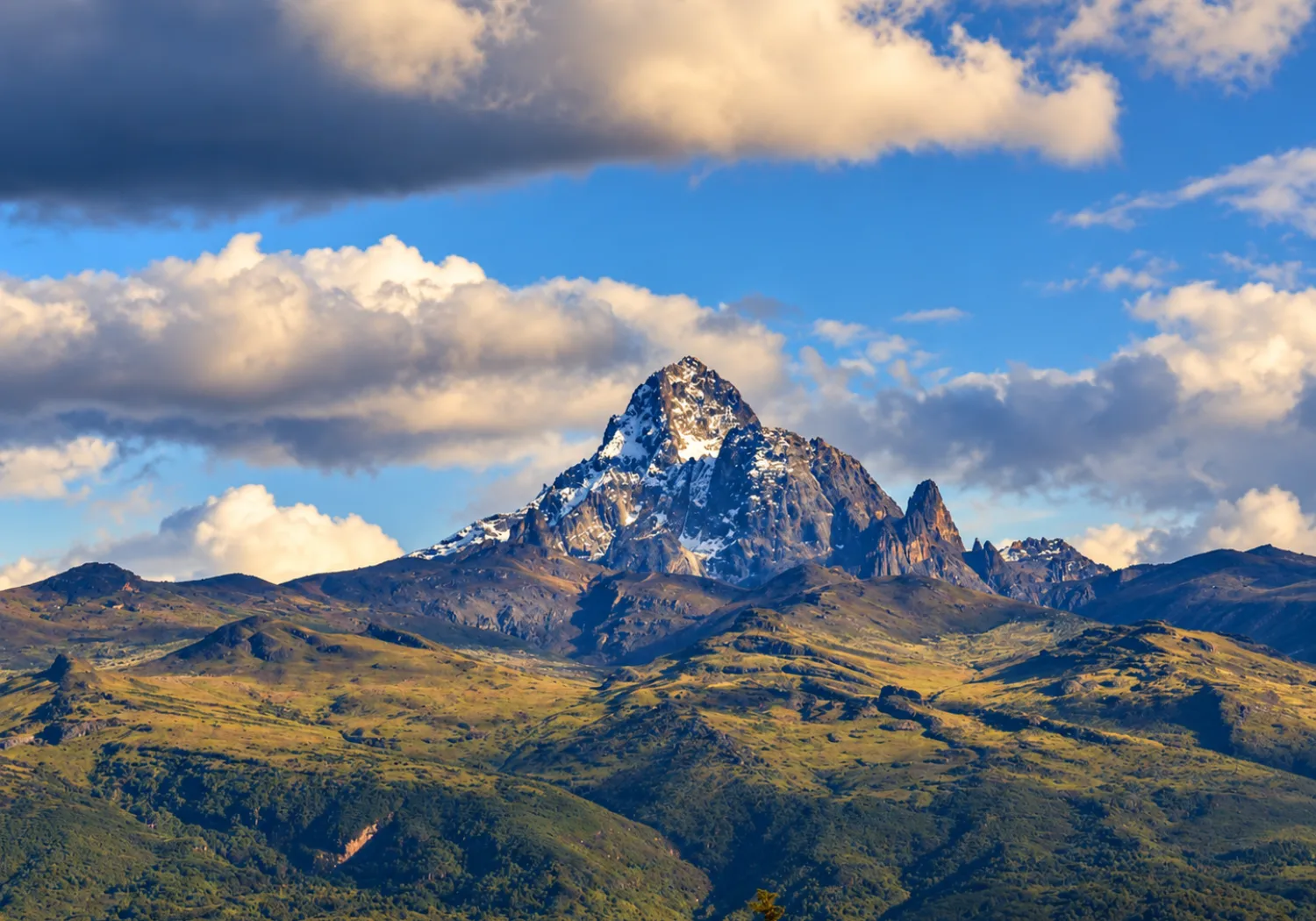
Mount Kenya National Park is one of Kenya’s most spectacular natural destinations. It surrounds the slopes of Mount Kenya, Africa’s second highest mountain. Rising to 5,199 metres, Mount Kenya creates an impressive backdrop across central Kenya. Its rugged peaks, forests, valleys, moorlands, alpine landscapes, and unique vegetation make it very different from Kenya’s famous savannah parks.
Although Mount Kenya is best known for hiking and mountain climbing, the park offers much more. Its lower slopes support elephants, buffaloes, leopards, forest antelope, and many bird species. Higher elevations reveal a fascinating alpine environment with giant lobelias, tussock grass, rocky valleys, and unusual mountain vegetation.
Visitors can enjoy mountain trekking, nature walks, birdwatching, wildlife viewing, photography, and scenic drives. Mount Kenya also works well as part of a longer Kenya safari.
You can combine a mountain adventure with Ol Pejeta Conservancy, Samburu National Reserve, Lake Nakuru, or the Masai Mara.
Where Is Mount Kenya National Park?
Mount Kenya National Park lies in central Kenya, approximately 180 kilometres northeast of Nairobi. Nanyuki is one of the main gateways to the mountain and provides a convenient base for visitors. Several routes provide access to Mount Kenya. Sirimon approaches from the northwest, Naro Moru approaches from the west, and Chogoria approaches from the eastern side.
Nanyuki is particularly convenient for travellers combining Mount Kenya with a wildlife safari. Ol Pejeta Conservancy and several Laikipia wildlife conservancies are also nearby. Visitors can therefore combine mountain scenery with some of Kenya’s best wildlife experiences.
What Makes Mount Kenya National Park Special?
Africa’s Second Highest Mountain
Mount Kenya is an extinct volcano with three main peaks. Batian is the highest at 5,199 metres, followed by Nelion at 5,188 metres.
Point Lenana reaches 4,985 metres and is the main summit reached by most trekkers. Unlike Batian and Nelion, Point Lenana does not require technical rock climbing.
Reaching the summit provides a rewarding challenge for adventurous travellers. Sunrise from Point Lenana can also create one of the most memorable moments of a Mount Kenya trek.
A Landscape That Changes With Altitude
One of Mount Kenya’s greatest attractions is the dramatic change in scenery as you gain altitude.
Lower areas are covered by forests and bamboo. Higher sections gradually become open moorlands with giant vegetation and rocky terrain.
Further up, the landscape becomes increasingly alpine. Glacial valleys, rocky peaks, mountain tarns, and unique vegetation create scenery that feels completely different from the Kenyan landscapes below.
This changing environment makes every stage of a Mount Kenya trek interesting.
Wildlife in Mount Kenya National Park
Wildlife is an important part of the Mount Kenya experience. Although the mountain is best known for hiking, its lower slopes provide habitat for a variety of animals.
Elephants are among the most impressive animals found around the mountain. Buffaloes also inhabit the forests and open areas.
Visitors may encounter leopards, giant forest hogs, bushbucks, waterbucks, duikers, and tree hyraxes. Dense vegetation can make sightings unpredictable, but this also makes every encounter exciting.
Wildlife in the Forest
| Wildlife | Habitat |
|---|---|
| Elephant | Forests and lower mountain slopes |
| Buffalo | Forests, clearings, and open areas |
| Leopard | Forests and rocky areas |
| Giant forest hog | Mountain forests |
| Bushbuck | Forests and woodland |
| Waterbuck | Forest edges and areas near water |
| Duiker | Forests and dense vegetation |
| Tree hyrax | Mountain forests and rocky areas |
Forest wildlife can be difficult to spot because vegetation provides plenty of cover. However, experienced guides know where to look and can identify tracks, calls, and other signs.
Wildlife viewing therefore feels very different from a traditional savannah safari. Instead of watching animals across open plains, you experience them within forests, valleys, and mountain habitats.
Wildlife in the Higher Zones
Wildlife becomes less abundant as you climb higher. However, some animals have adapted remarkably well to the cold and challenging mountain environment.
Rock hyraxes are particularly well adapted to higher elevations. Visitors may also encounter smaller mammals moving through the moorlands.
| Wildlife | Habitat |
|---|---|
| Rock hyrax | Rocky areas and higher elevations |
| Small mammals | Moorlands and alpine zones |
| Mountain adapted species | Higher mountain habitats |
Changing wildlife patterns are part of what makes Mount Kenya special. Each altitude zone creates a different environment for animals and plants.
Birdwatching in Mount Kenya National Park
Mount Kenya is an excellent destination for birdwatching. Its different vegetation zones support a wide variety of bird species.
Forest areas provide habitat for colourful forest birds. Open areas attract raptors, sunbirds, and other species.
Walking is particularly rewarding for birdwatchers. Moving slowly through the forest makes it easier to hear calls and notice birds among the vegetation.
Birdlife to Look For
| Birdlife | Where to Look |
|---|---|
| Sunbirds | Forest edges and flowering plants |
| Raptors | Open areas and forest edges |
| Forest birds | Dense forest and woodland |
| Mountain birds | Higher elevations |
| Alpine species | Moorlands and alpine zones |
Experienced birdwatchers can explore the lower forest before beginning a longer mountain trek. This creates an opportunity to experience both forest birdlife and species adapted to higher elevations.
Hiking and Trekking on Mount Kenya
Hiking is one of the main reasons travellers visit Mount Kenya National Park. Several routes provide access to the mountain, with each offering a different experience.
Your choice depends on your fitness, available time, preferred scenery, and trekking experience.
Sirimon Route
Sirimon is one of the most popular routes for climbing Mount Kenya. It approaches the mountain from the northwest and provides a gradual ascent through different vegetation zones.
The route begins through forest before entering bamboo and moorland areas. As you gain altitude, the vegetation becomes shorter and the scenery becomes more dramatic.
Old Moses Camp provides an important stopping point before trekkers continue towards the higher mountain areas.
Sirimon is particularly attractive to travellers who want a scenic ascent with time to adjust to the increasing altitude.
Chogoria Route
Chogoria is famous for its spectacular scenery. It approaches Mount Kenya from the eastern side and offers some of the most dramatic landscapes on the mountain.
The route passes through forests, moorlands, valleys, and alpine areas. Gorges Valley is one of its most memorable sections.
Lake Ellis and Lake Michaelson add further beauty to the route. Photographers often enjoy Chogoria because of its varied scenery and impressive mountain views.
Many trekkers combine Sirimon and Chogoria. They ascend through Sirimon and descend through Chogoria, allowing them to experience two different sides of Mount Kenya.
Naro Moru Route
Naro Moru approaches Mount Kenya from the western side. It is another popular route for reaching Point Lenana.
The route provides a relatively direct approach. This makes it attractive to travellers with limited time.
Some sections can be challenging, particularly during wet conditions. Proper preparation and an experienced mountain guide remain important.
Climbing Point Lenana
Reaching the Trekking Summit
Point Lenana is the main summit for most Mount Kenya trekkers. Reaching it requires determination, preparation, and good acclimatisation. Trekkers normally begin the final ascent very early in the morning. Starting before sunrise allows them to reach the summit around dawn. Watching the sun rise above the surrounding landscape can be an unforgettable experience. On clear mornings, the views stretch across the surrounding highlands. Altitude can make the final section demanding. A gradual ascent helps the body adjust to the changing elevation.
Batian and Nelion
Batian and Nelion are Mount Kenya’s two highest peaks. Reaching them requires technical climbing skills and specialist equipment.
They are therefore suitable for experienced mountaineers with the appropriate training.
Most visitors do not need to climb either peak. Point Lenana provides an excellent objective for travellers who want to experience Mount Kenya without technical rock climbing.
Activities in Mount Kenya National Park
Mountain Trekking
Mountain trekking remains the most popular activity on Mount Kenya. Travellers can choose routes based on their experience, available time, and preferred scenery.
Multi day treks provide the opportunity to experience several vegetation zones. Shorter walks can also introduce visitors to the lower slopes without requiring a summit attempt.
Nature Walks
Nature walks provide a relaxed way to experience Mount Kenya. Visitors can explore forests, streams, clearings, and lower mountain habitats.
Walking also provides better opportunities to notice plants, insects, birds, tracks, and smaller wildlife.
This makes nature walks particularly suitable for travellers interested in photography and nature.
Wildlife Viewing
Wildlife viewing can form part of a Mount Kenya itinerary. Forest areas provide opportunities to encounter elephants, buffaloes, antelope, and other animals.
However, Mount Kenya is not primarily a traditional game viewing destination. Dense vegetation can make sightings less predictable.
Travellers who want a stronger wildlife experience can combine Mount Kenya with nearby Ol Pejeta Conservancy or another Laikipia wildlife conservancy.
Birdwatching
Birdwatching is another rewarding activity. Different elevations support different bird species, giving bird enthusiasts plenty to explore.
Walking through the forest provides an excellent opportunity to listen for calls and observe birds in their natural habitat.
Photography
Mount Kenya offers outstanding opportunities for landscape photography.
Forests, valleys, alpine vegetation, lakes, rocky peaks, and changing skies provide countless subjects.
Photographers can also combine Mount Kenya with Laikipia. This creates an itinerary featuring both dramatic mountain landscapes and classic African wildlife.
Mount Kenya National Park Entry Fees
Mount Kenya National Park has different entry rates depending on nationality and residency.
Visitors should check the applicable rate when planning their trip because park fees can change.
| Category | Adult | Child |
|---|---|---|
| East African Citizen | KES 800 | KES 400 |
| Kenya Resident | KES 1,100 | KES 550 |
| African Citizen | USD 30 | USD 15 |
| Non Resident | USD 70 | USD 35 |
These rates are important when preparing your Kenya safari budget. Your total trip cost may also include transport, accommodation, guiding, camping, and mountain trekking services.
Best Time to Visit Mount Kenya National Park
Mount Kenya can be visited throughout the year. However, weather conditions can influence the trekking experience.
Drier periods generally provide more favourable hiking conditions. Clear mornings can also offer better views of the mountain peaks.
Rain can make some trails slippery. Clouds can also reduce visibility at higher elevations.
Mountain weather can change quickly, so travellers should prepare for cold temperatures, rain, wind, and changing conditions.
Warm layers, waterproof clothing, suitable hiking boots, gloves, and other mountain equipment are essential for longer treks.
How to Get to Mount Kenya National Park
By Road
Mount Kenya is easily accessible from Nairobi by road. The journey passes through the beautiful central highlands before reaching Nanyuki and the various mountain access points.
Nanyuki provides a convenient base for travellers visiting Mount Kenya. From here, you can continue towards Sirimon or other access points depending on your itinerary.
A 4X4 Land Cruiser is particularly useful when travelling on mountain roads and combining Mount Kenya with other safari destinations.
By Air
Travellers can also fly from Nairobi to Nanyuki. This option saves time and works well for visitors with a shorter itinerary.
Flying can also make it easier to combine Mount Kenya with Laikipia, Samburu, or other northern Kenya destinations.
Accommodation Near Mount Kenya National Park
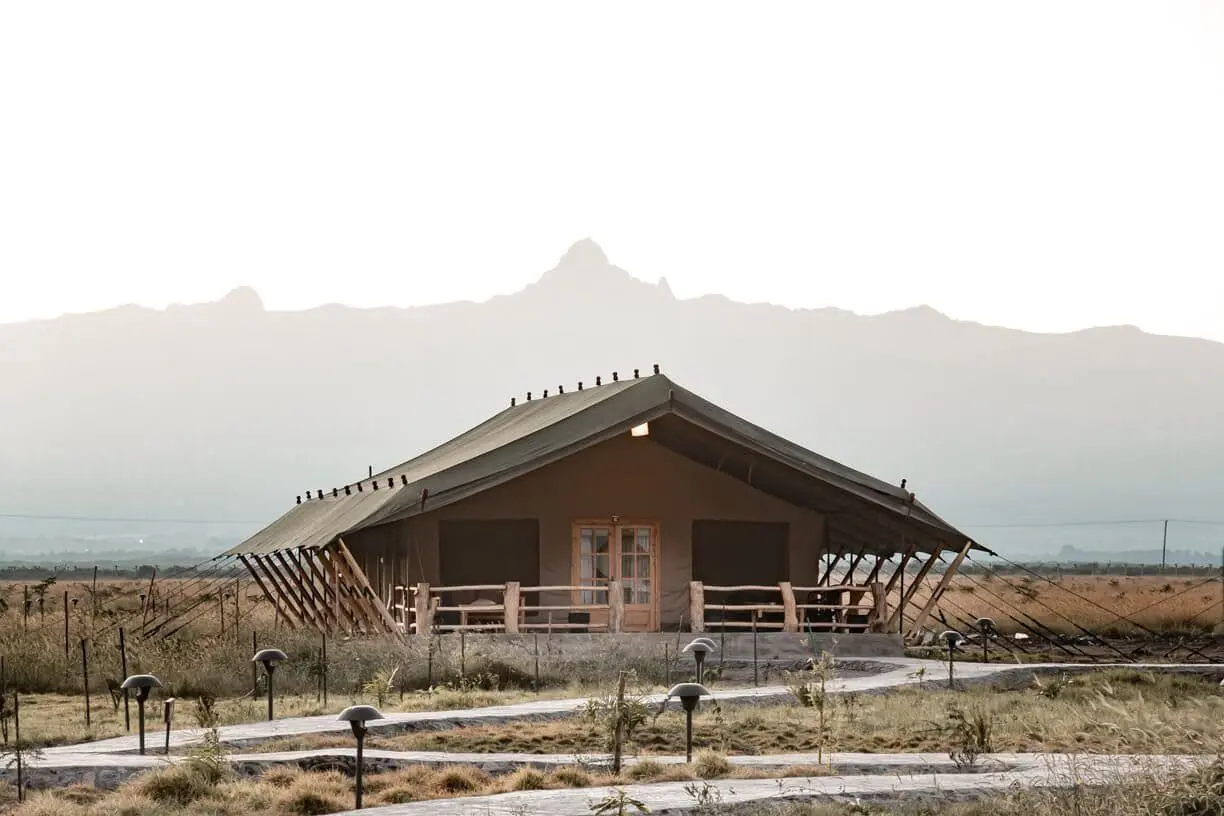
Several accommodation options are available around Mount Kenya. They range from luxury resorts to mountain lodges and comfortable camps.
Many trekkers spend a night near the mountain before beginning their climb. This gives them time to organise equipment and prepare for the trek.
Other travellers prefer to stay around Nanyuki and combine their Mount Kenya experience with wildlife viewing in Laikipia.
| Accommodation | Type |
|---|---|
| Fairmont Mount Kenya Safari Club | Luxury resort |
| Serena Mountain Lodge | Mountain lodge |
| Naro Moru River Lodge | Mountain lodge |
| Castle Forest Lodge | Forest lodge |
| Timau River Lodge | Lodge and campsite |
| Bantu Mountain Lodge | Mountain lodge |
Mount Kenya as Part of a Kenya Safari
Mount Kenya works beautifully as part of a longer Kenya safari.
Travellers can begin in Nairobi before heading towards Mount Kenya. From there, they can continue to Ol Pejeta, Samburu, Lake Nakuru, or the Masai Mara.
Combining Mount Kenya with Ol Pejeta is particularly appealing. You can spend several days exploring the mountain before enjoying game drives among rhinos, elephants, lions, and other wildlife.
A Mount Kenya and Masai Mara safari also creates an excellent combination. You experience dramatic mountain landscapes before heading into the open plains of the Mara.
Why Visit Mount Kenya National Park?
Mount Kenya offers a completely different experience from Kenya’s traditional savannah parks.
Here, travellers can walk through forests, climb through moorlands, discover alpine landscapes, and stand beneath dramatic mountain peaks.
Adventure seekers can plan a multi day trek to Point Lenana. Nature lovers can explore the forests and enjoy birdwatching. Wildlife enthusiasts can combine the mountain with nearby conservancies.
Its variety makes Mount Kenya suitable for different types of travellers. You do not have to be an experienced climber to enjoy the destination.
Plan Your Mount Kenya Safari with Olengugih Safaris
Mount Kenya National Park is an exceptional destination for adventure, nature, wildlife, and photography.
Its changing landscapes provide a memorable experience from the forested lower slopes to the dramatic alpine zones.
Olengugih Safaris can organise your Mount Kenya adventure as a standalone trip or combine it with a wider Kenya safari.
We use comfortable 4X4 Land Cruiser Jeeps and experienced professional driver guides. Your itinerary can include mountain trekking, accommodation, transport, and wildlife experiences in nearby destinations.
Whether you want to climb Point Lenana, explore the mountain forests, enjoy birdwatching, or combine Mount Kenya with a wildlife safari, we can create an itinerary around your interests.
Contact Olengugih Safaris today and start planning your Mount Kenya National Park adventure.
What stands out
Highlights
Point Lenana Summit and Sunrise Views in Mount Kenya National Park
Dramatic Mountain Peaks and Alpine Scenery in Mount Kenya Park
Unique High Altitude Vegetation and Scenic Mountain Landscapes
Elephants, Buffaloes and Other Mountain Wildlife Encounters
Scenic Sirimon and Chogoria Routes for Mountain Trekking Adventures
Diverse Mountain Birdlife Across Forest and Alpine Habitat
Where it is
Mount Kenya National Park map
Explore the location of Mount Kenya National Park and see how it fits into your Kenya safari journey.