About Queen Elizabeth National Park
Queen Elizabeth National Park: Uganda’s Wildlife and Scenic Safari Gem
Queen Elizabeth National Park is one of Uganda’s most diverse safari destinations, combining open savannah, wetlands, forests, lakes, and dramatic views of the Rwenzori Mountains. Located in western Uganda, the park is famous for elephants, lions, buffaloes, hippos, chimpanzees, and an impressive variety of birds.
The park offers a different experience from Uganda’s forest destinations. Instead of focusing entirely on primates, visitors can enjoy game drives, boat cruises, birdwatching, chimpanzee trekking, and other nature experiences within a single protected area. As a result, Queen Elizabeth National Park fits naturally into both classic wildlife safaris and longer Uganda adventure itineraries.
Where Is Queen Elizabeth National Park Located?
Queen Elizabeth National Park lies in western Uganda, between Lake Edward and Lake George and close to the Rwenzori Mountains. The park covers approximately 1,978 square kilometres, making it one of the country's major protected areas.
Its strategic location also makes it easy to combine with other destinations. Travellers can connect a safari here with Kibale National Park for chimpanzee trekking or continue toward Bwindi Impenetrable National Park for mountain gorilla trekking.
Why Is Queen Elizabeth National Park Famous?
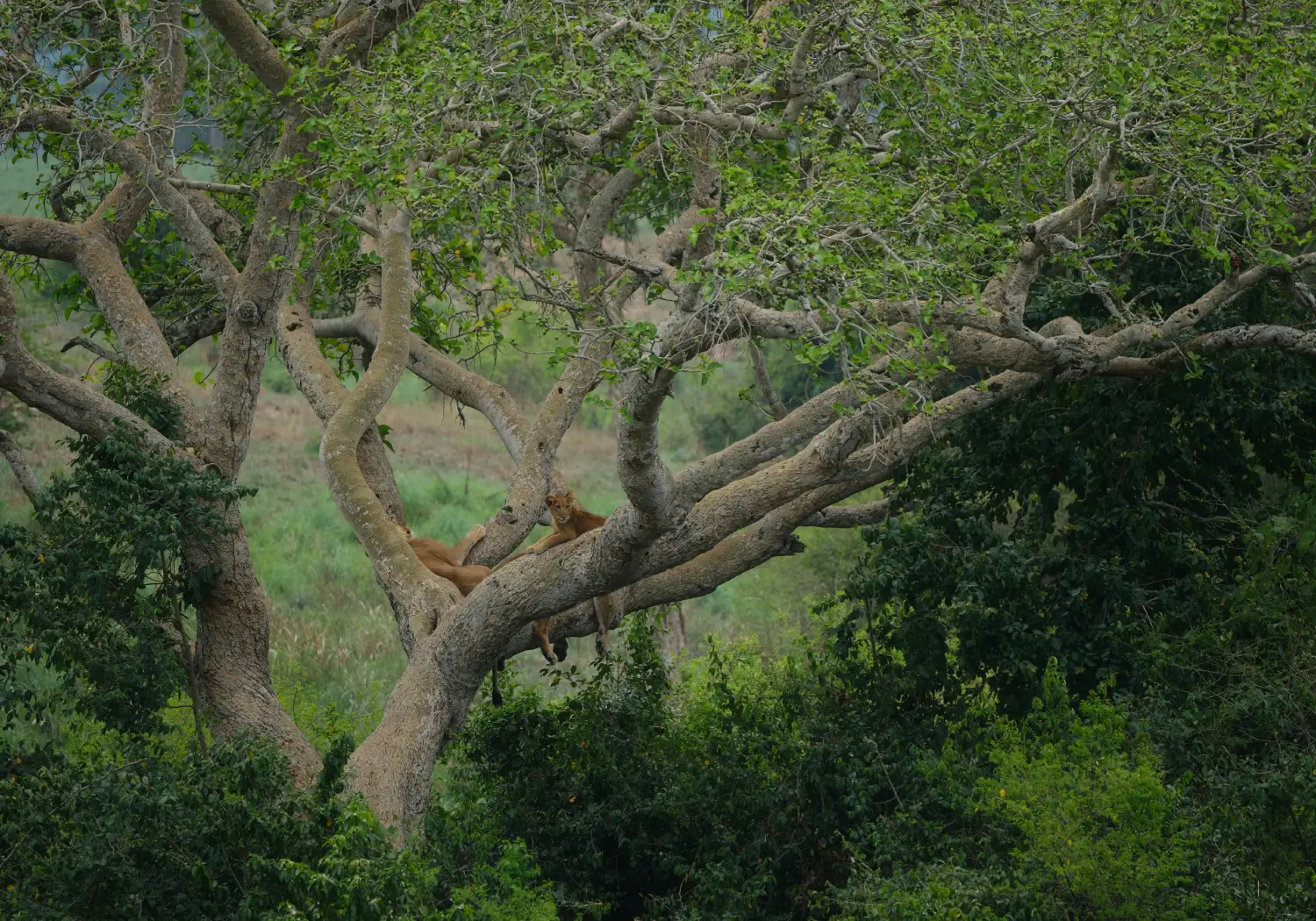
The park is famous for its diverse landscapes and abundant wildlife, but one of its most distinctive attractions is the tree-climbing lions of Ishasha in the southern sector.
Queen Elizabeth also contains the spectacular Kazinga Channel, which connects Lake Edward and Lake George. Boat cruises along the channel provide excellent opportunities to see hippos, crocodiles, elephants, buffaloes, and numerous waterbirds from the water.
What Wildlife Can You See in Queen Elizabeth?
Queen Elizabeth National Park supports a remarkable variety of wildlife across its savannahs, wetlands, forests, and lakeshores.
Wildlife to look for includes:
- Lions — Found across several areas of the park, including the famous Ishasha sector.
- Tree-climbing lions — Particularly associated with Ishasha, where lions may rest in large fig and acacia trees.
- African elephants — Frequently encountered during game drives.
- Buffaloes — Often seen in large herds across the grasslands.
- Uganda kob — One of the park’s most characteristic antelopes.
- Hippopotamuses — Especially common around the Kazinga Channel and lakeshores.
- Leopards — Present but considerably more elusive than lions.
- Topi and bushbuck — Among the other antelope species found in the park.
- Chimpanzees — Best encountered through trekking in the Kyambura Gorge.
What Birds Can You See in Queen Elizabeth?
Queen Elizabeth is an excellent destination for birdwatching in Uganda, with numerous habitats supporting a remarkable variety of resident and migratory species.
Birds to look for include:
- African fish eagle
- Great blue turaco
- African skimmer
- Saddle-billed stork
- Grey crowned crane
- Malachite kingfisher
- Black bee-eater
- Papyrus gonolek
- African jacana
- Marsh harrier
The Kazinga Channel is particularly productive for waterbirds, while the park’s woodland and forest habitats provide opportunities to find species that prefer denser vegetation.
What Activities Can You Enjoy in Queen Elizabeth?
Game drives provide the main safari experience, allowing visitors to explore the park's savannah and search for elephants, lions, buffalo, Uganda kob, leopards, and other wildlife.
A Kazinga Channel boat cruise is another major attraction. As the boat moves between Lake Edward and Lake George, visitors can watch hippos crowding the water, crocodiles resting along the banks, and elephants or buffalo approaching the shoreline.
In addition, visitors can enjoy chimpanzee trekking in Kyambura Gorge, guided nature walks, birdwatching, and cultural experiences with communities surrounding the park.
What Is the Best Time to Visit Queen Elizabeth National Park?
The best time to visit Queen Elizabeth National Park is generally during the drier periods from June to September and December to February. During these months, wildlife often becomes easier to locate around water sources, while game-drive roads are generally more manageable.
However, the park can be explored year-round. The wetter seasons bring greener landscapes and can be particularly rewarding for birdwatching and photography. Travelers should nevertheless expect occasional rain and muddy conditions.
Why Should You Visit Queen Elizabeth National Park?
Queen Elizabeth National Park brings together big game, tree-climbing lions, hippos, chimpanzees, spectacular landscapes, and exceptional birdlife in one destination. Few Ugandan parks offer such a broad combination of wildlife and activities.
Whether you are watching elephants on a game drive, cruising along the Kazinga Channel, searching for lions in Ishasha, or trekking chimpanzees through Kyambura Gorge, the park provides a varied and memorable Uganda safari experience.
Highlights
- Watch tree climbing lions in the Ishasha wilderness
- Cruise the Kazinga Channel among hippos and elephants
- Track chimpanzees through the dramatic Kyambura Gorge
- Spot elephants, buffaloes, leopards, and Uganda kob
- Enjoy spectacular views of the Rwenzori Mountains and savannahs
Queen Elizabeth National Park map
Explore the location of Queen Elizabeth National Park and see how it fits into your Kenya safari journey.